Hansa Technology

Hardness Testing Machines

Hardness Testing Machine is used to accurately measure a material's resistance to indentation, ensuring quality and performance compliance.


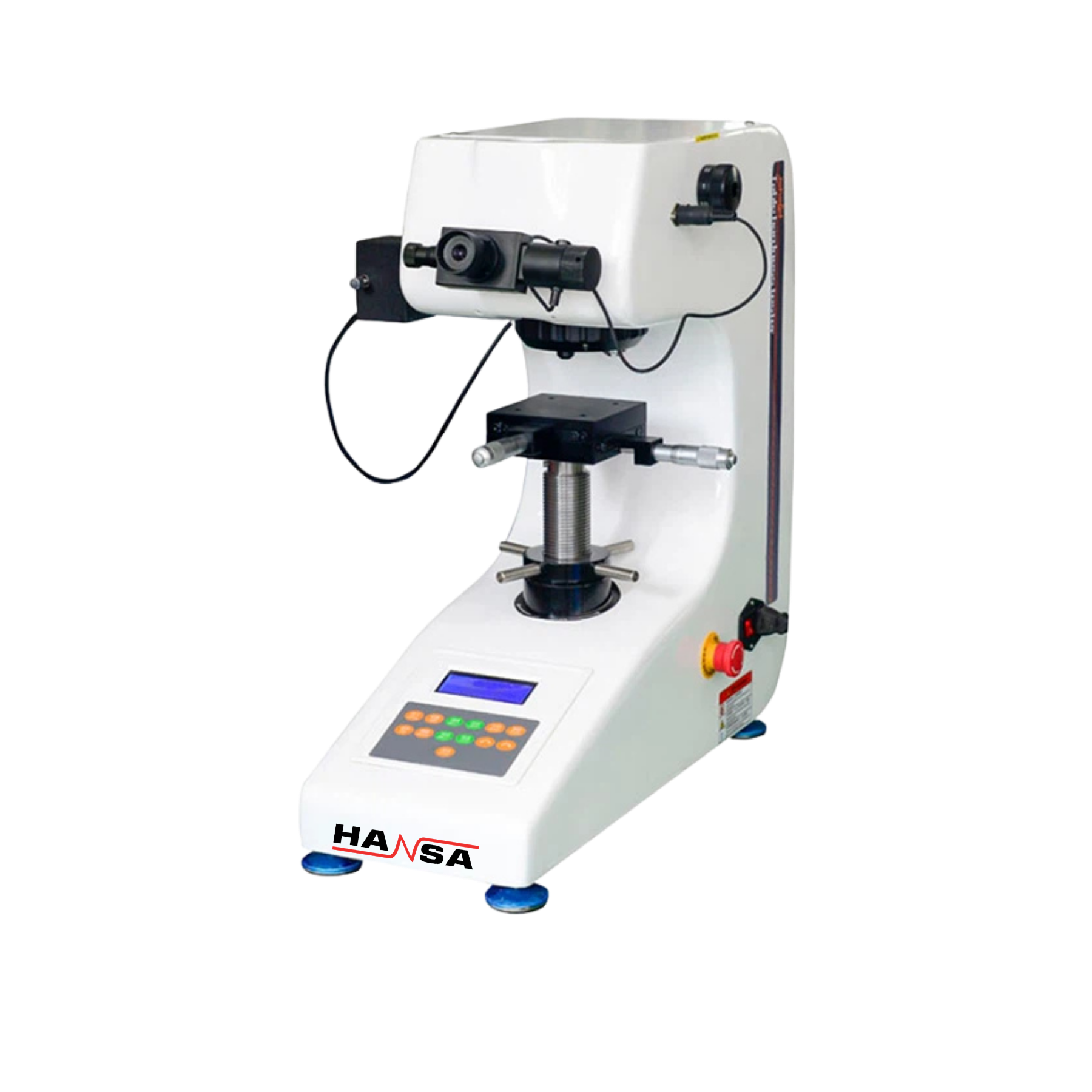
Digital Vickers Hardness Tester HTV

  • Heavy-duty machine body made from high-quality one-piece cast iron for strength, durability, and vibration-free performance.
  • Advanced turbine worm lifting system improves testing stability, enhances accuracy, and eliminates refocusing after testing.
  • Automatic turret with dual objective lenses enables fast switching between observation and measurement modes.
  • High-definition micrometer eyepiece with built-in encoder provides one-key indentation diagonal measurement with reduced human error.
  • Intelligent digital control system automatically converts multiple hardness scale units for convenient operation.
  • Programmable maximum and minimum hardness limits with buzzer alarm for out-of-range test values.
  • Built-in database stores grouped test data automatically, supporting over 2000 saved results.
  • Supports hardness curve display, optional CCD image system, wireless Bluetooth printer, and RS232/USB connectivity.

Overview:HVS-1000ZT touch screen automatic turret digital display Vickers hardness tester adopts 8-inch touch screen and high-speed ARM processor, with intuitive display, friendly man-machine interaction and easy operation. It has fast computing speed, huge database storage, automatic data correction, and provides data line reports.

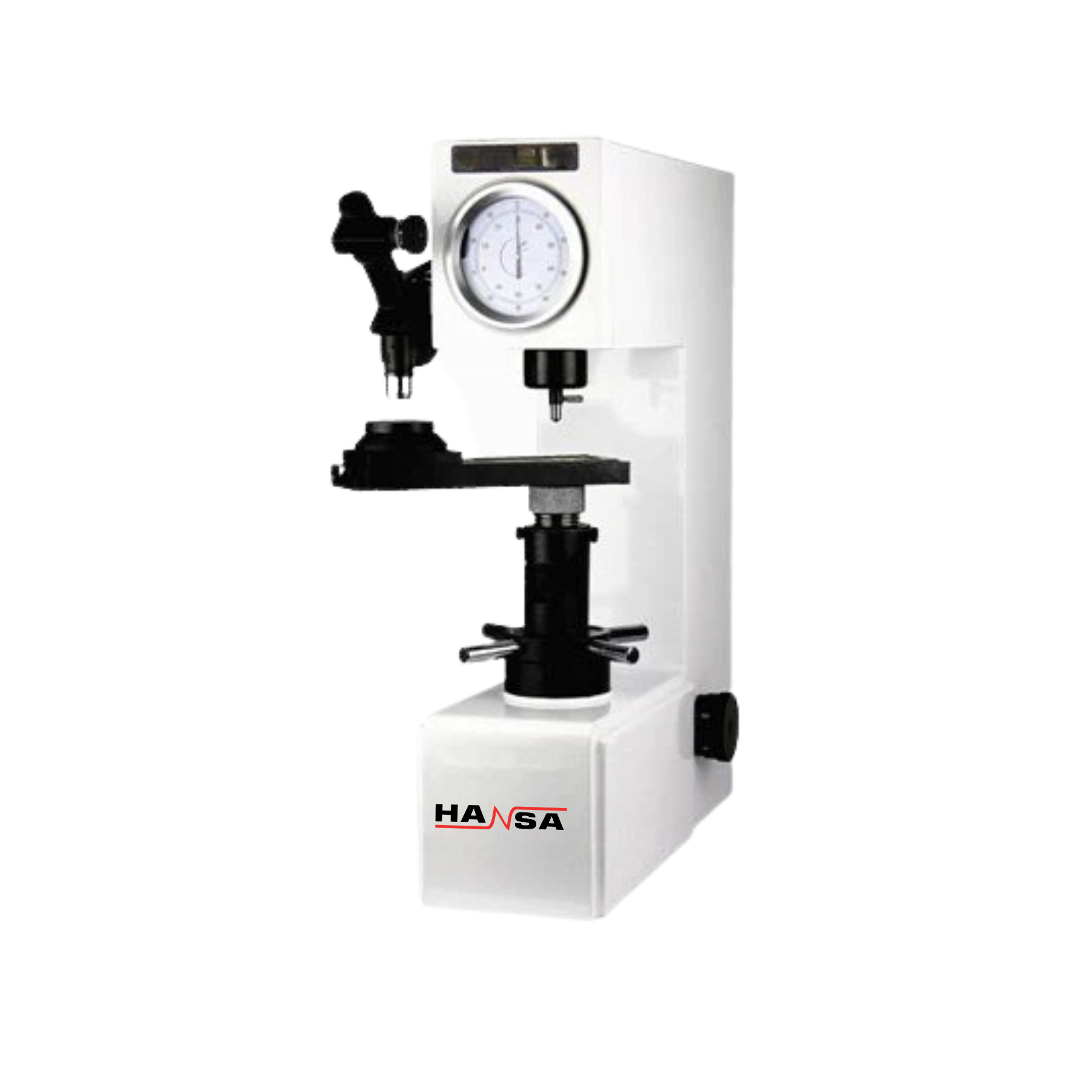
Rockwell Hardness Tester HTR-150A

  • The HT-150A Rockwell hardness tester is designed based on the principle of the Rockwell hardness test.

    It is suitable for testing scenarios with high requirements for Rockwell

    hardness value control and can also be used as an arbitration

    hardness tester in metrology departments of mechanical

    factories with group working Rockwell hardness testers.Tests for

    HRA, HRB and HRC Rockwell hardness can be conducted by changing

    the indenter and load. It is easy to operate, has stable readings and is

    easy to maintain. It is widely used for metal inspection, research

    and production in industries such as computing,

    mechanical manufacturing, metallurgy and construction.

    Main frame:

    • Rigidity (frame deformation) High internal control resistance < -0.8 degrees, national standard resistance is -1.5 degrees;
    • Perpendicularity of the worktable to the indenter axis ≤ 0.08mm, the highest domestic standard
    • Coaxiality of the lifting lead screw to the spindle line ≤ 0.2mm – the highest domestic standard


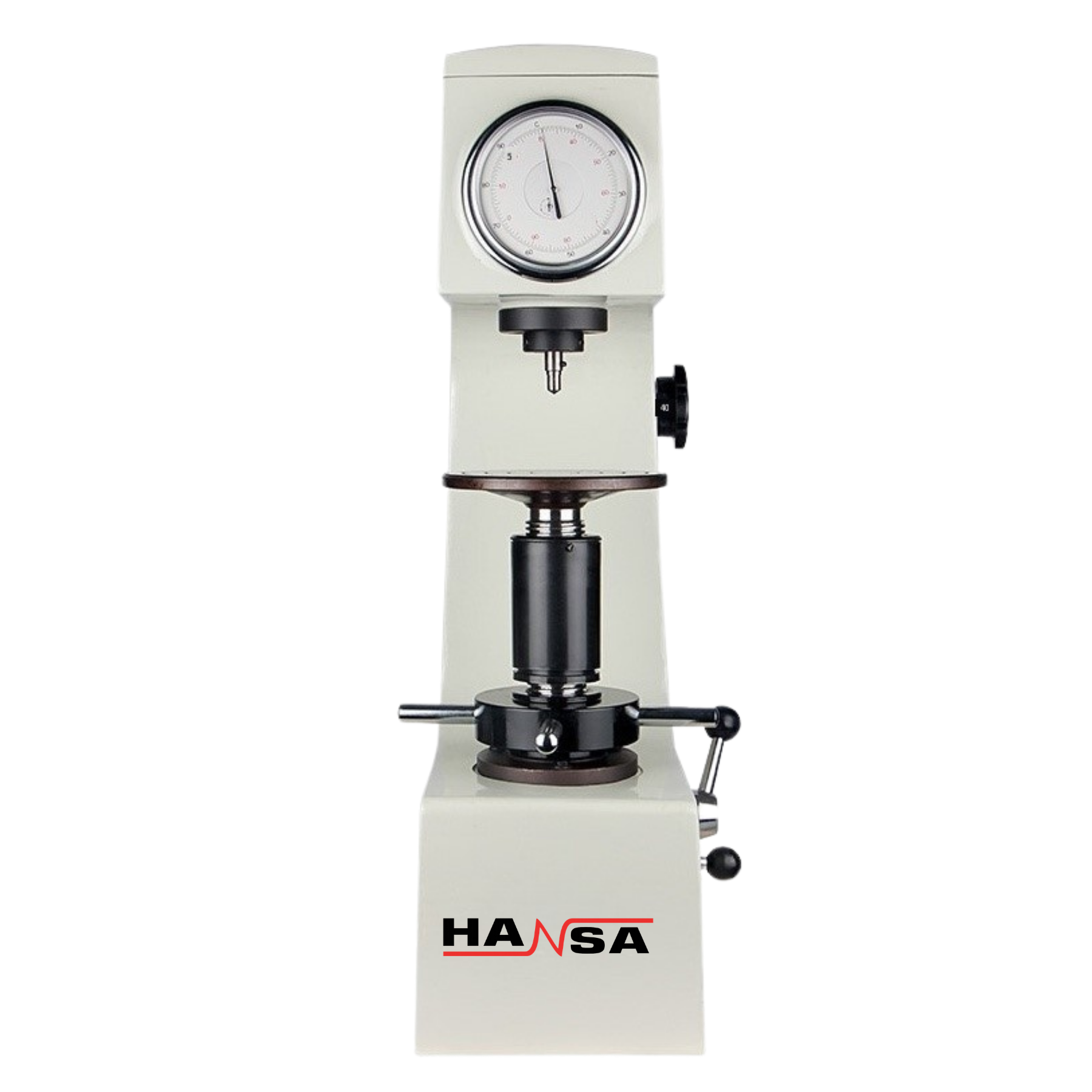
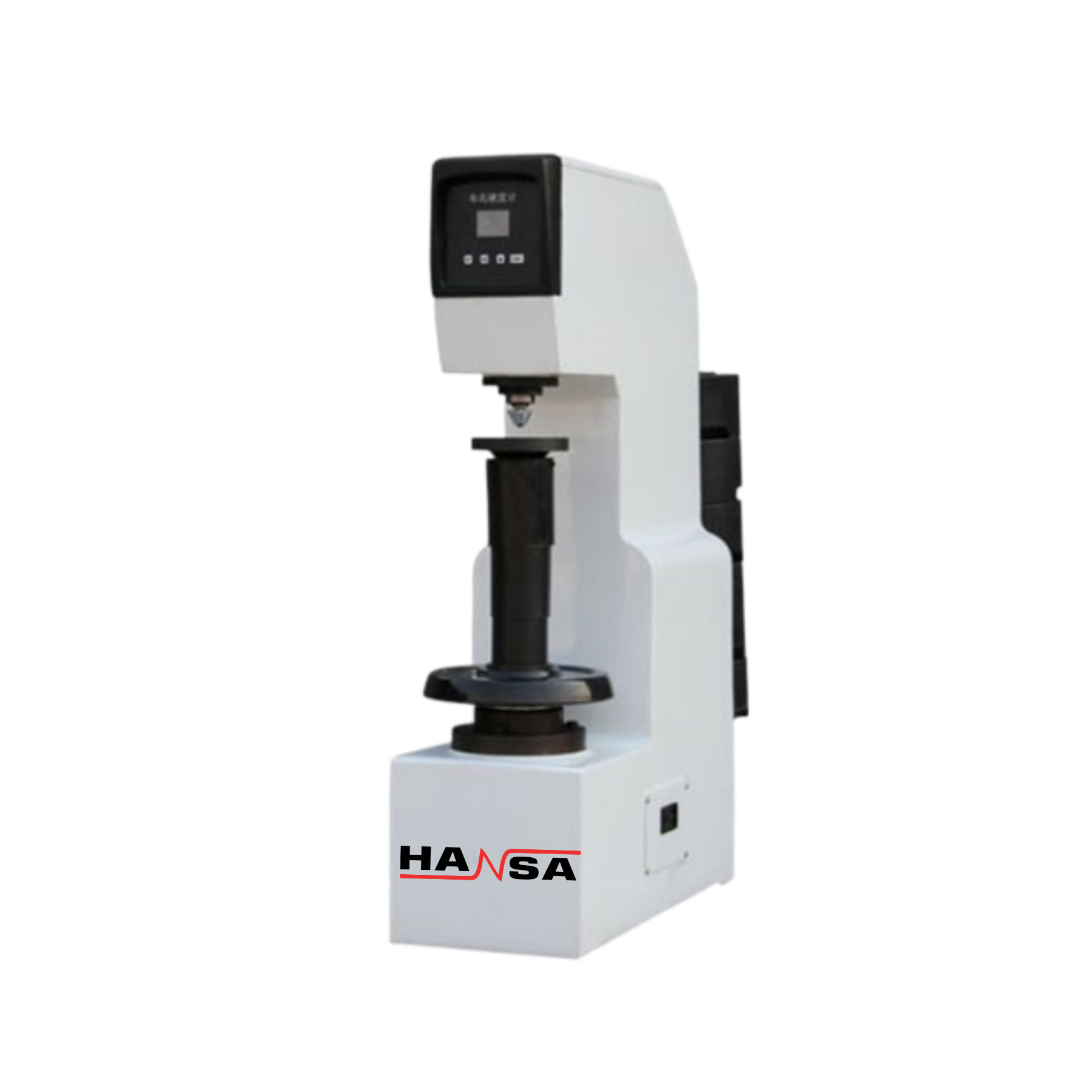
Brinell Hardness Tester HTB-3000B

  • The HT-3000B Brinell hardness tester is a benchtop hardness tester suitable for Brinell hardness of annealed and normalized workpieces, cast parts, non-ferrous metals and various softer components or unquenched steel parts, etc The body part of the product is formed in one piece by casting process and has undergone a long aging treatment. Compared with the spliced plate process, it has minimal deformation over long-term use and can effectively adapt to various harsh environments;

Functions:

  • Car paint, high quality grade, strong scratch resistance, still shiny after years of use;
  • Sturdy structure, good rigidity, precise, reliable, durable, high test efficiency;
  • The strong and weak electrical phases of the control panel are separated to avoid mutual interference and breakdown of the panel due to excessive current, improving the safety of operation and the service life of the panel;
  • High-power solid-state relays, high power, low power consumption, contactless, spark-free, high isolation between control and controlled, long service life;
  • The high-torque permanent magnet synchronous motor replaces the old-fashioned reducer, making the machine quieter and with an extremely low failure rate;
 

Technical Parameters of Brinell Hardness Tester HTB-3000B

S.NO NAME PARAMETERS
1 Measuring Range 8 – 650 HBW
2 Test Force 1838.8, 2415.8, 4903.5, 7355.3, 9807, 14705, 29421 N
(187.5, 250, 500, 750, 1000, 1500, 3000 kgf)
3 Maximum Allowable Sample Height 230 mm
4 Distance from Indenter Center to Machine Wall 120 mm
5 Power Supply 220V, 50/60 Hz
6 Dimensions 700 × 268 × 842 mm
7 Weight About 210 kg

HBRVS-187.5 Brinell Rockwell Vickers 3 in 1 Hardness Tester

    • HBRV-187.5 Brinell Rockwell Vickers hardness tester is a multi-purpose and multi-functional hardness machine with three test methods of Brinell, Rockwell and Vickers and seven test forces. It can meet the requirements of various hardness tests of users. The application, holding and unloading of the test force are completed automatically. It has a wide range of use and is easy to operate. It is a common hardness testing machine for industrial and mining enterprises and scientific research institutions.
    • The instrument is suitable for hardened steel, surface hardened steel, hard alloy steel, cast iron, non-ferrous metals, various quenched and tempered and annealed steels, hardened steel sheets, and also suitable for soft metals, surface heat treatment and chemical heat treatment.

Technical Parameters of Universal Hardness Tester

S.NO NAME SPECIFICATIONS
1 Rockwell Scale HRA, HRB, HRC, HRD, HRE, HRF, HRG, HRH, HRK
2 Rockwell Test Force 60kgf (588N), 100kgf (980.7N), 150kgf (1471N)
3 Brinell Scale HBW2.5/31.25, HBW2.5/62.5, HBW5/62.5, HBW2.5/187.5
4 Brinell Test Force 31.25kgf (306.5N), 62.5kgf (612.9N), 187.5kgf (1839N)
5 Vickers Scale HV30, HV100
6 Vickers Test Force 30kgf (294.2N), 100kgf (980.7N)
7 Hardness Reading Rockwell: Dial Type; Brinell & Vickers: Measuring Microscope
8 Microscope Magnification 37.5×, 75×
9 Hold Time 2 ~ 60s
10 Maximum Height of Specimen Rockwell: 170mm; Brinell & Vickers: 140mm
11 Instrument Size 520 × 240 × 700mm
12 Instrument Weight 80kg
13 Power Supply AC220V ±5%, 50~60Hz

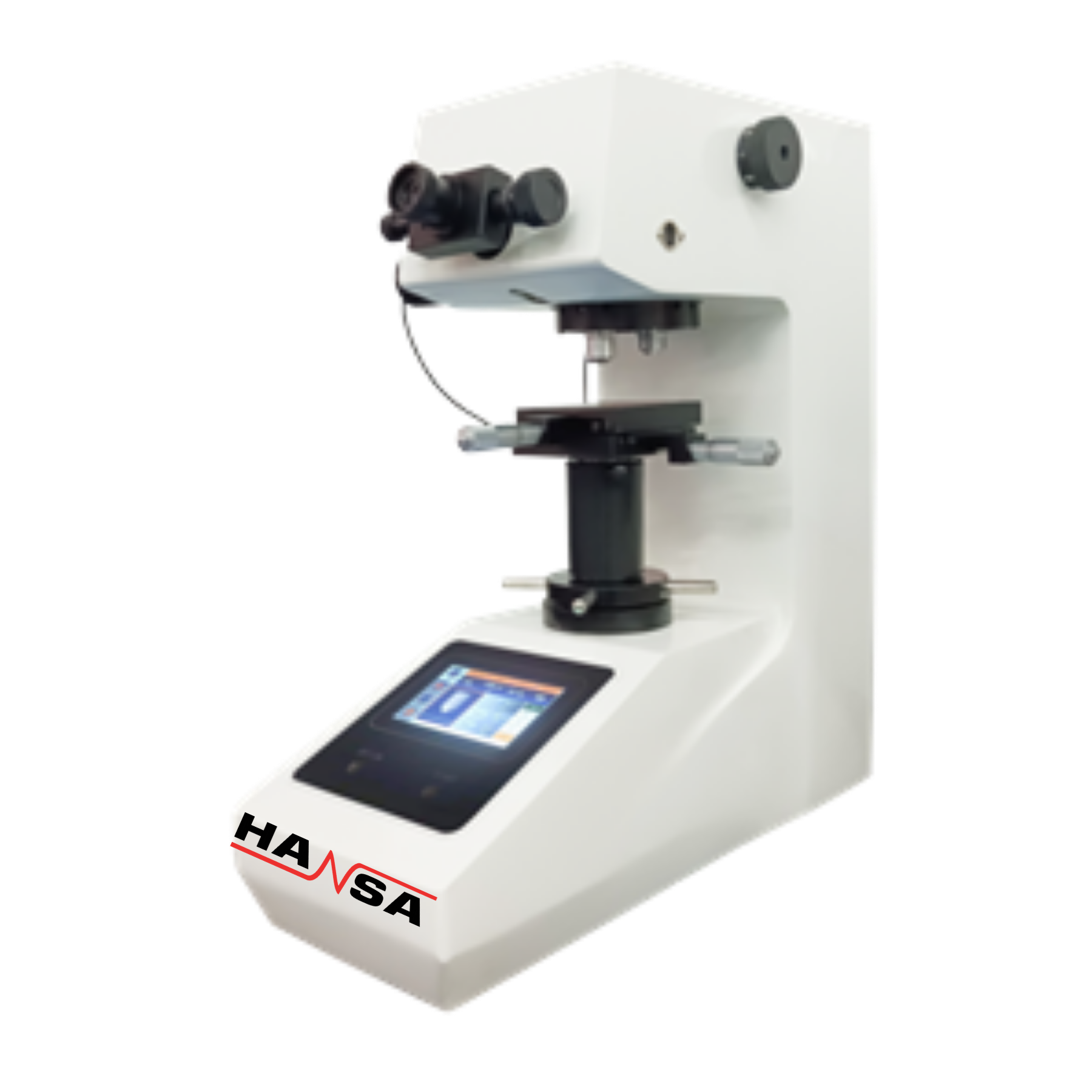
Micro Vickers Hardness Tester

  • Micro Vickers hardness tester with 5.1-inch touchscreen and high-speed ARM processor, intuitive display, friendly human-machine interaction, easy operation; Fast operation speed, massive database storage, automatic data correction, and data line report.
  • 1. The body is made of high-quality cast iron, cast in one piece, and treated with automotive paint, with a rounded and beautiful appearance;

    2. The turbine worm lift system improves test stability and accuracy, and no refocusing is required after the test is completed;

    3. Equipped with an automatic turret function, high-definition measurement and observation – dual objective lens combination, significantly reduces human operation interference and reading errors;

    4. Convenient numerical control system with automatic unit conversion for all hardness scales;

    5. The maximum and minimum hardness values can be set, and a beeping sound will be emitted when the test value exceeds the set range;

    6. With software hardness correction function, the hardness value can be corrected directly within a certain range;

    7. With database function, test data can be automatically grouped and saved. Each group can save 10 data, and more than 2000 data can be saved.

    8. It has a hardness value curve display function to visually show the changes in hardness values;

    9. Optional CCD image processing system, and optional Knoop indenter for Knoop hardness measurement;

    10. Accuracy complies with GB/T4340.2-2018 ISO6507-2 and ASTM E384.

Technical Parameters of Vickers Hardness Tester HTMV

S.NO NAME PARAMETERS
1 Model HTMV
2 Measuring Range 5 – 5000 HV
3 Test Force 0.09807, 0.2452, 0.4904, 0.9807, 1.961, 2.942, 4.904, 9.807 N
4 Data Entry Method Manual
5 Turret Mode Manual
6 Maximum Allowable Specimen Height 120 mm
7 Distance from Press Head Center to Machine Wall 110 mm
8 XY Worktable Size 100 × 100 mm
9 XY Worktable Stroke 25 × 25 mm
10 XY Worktable Minimum Unit 0.01 mm
11 Lens Magnification 10×, 40×
12 Total Magnification 100×, 400×
13 Minimum Step Size 0.025 μm
14 Hardness Resolution 0.1 HV
15 Power Supply AC 220V, 50Hz
16 External Dimensions 530 × 290 × 490 mm
17 Weight 45 kg

Important FAQs – Hardness Testing Machines

HTS Series Electro Mechanical Universal Testing Machines

What is a Hardness Testing Machine?

A Hardness Testing Machine measures a material's resistance to indentation, penetration, or deformation to determine its hardness.

What are the different types of hardness tests?

The most commonly used hardness tests are Rockwell, Brinell, Vickers, and Micro Vickers, each suitable for different materials and applications.

Which materials can be tested using a hardness tester?

Hardness testers can evaluate metals, alloys, castings, forgings, heat-treated components, plastics, and composite materials.

What is the difference between Rockwell, Brinell, and Vickers testing?

Rockwell measures penetration depth, Brinell uses a ball indenter for larger impressions, and Vickers uses a diamond indenter for precise hardness measurements.

Why is hardness testing important?

Hardness testing helps verify material quality, strength, wear resistance, heat treatment effectiveness, and compliance with industry standards.

How often should a hardness testing machine be calibrated?

To ensure accurate and reliable results, hardness testing machines should be calibrated regularly, typically once a year or as required by quality standards.

Get in touch

“Need reliable Universal Testing Machine solutions? Get in touch with Hansa Technology for expert support, product information, and customized testing solutions.”

Scroll to Top